
Harvesting Spring Wholecrop and Protecting Feed Value
10th August 2026
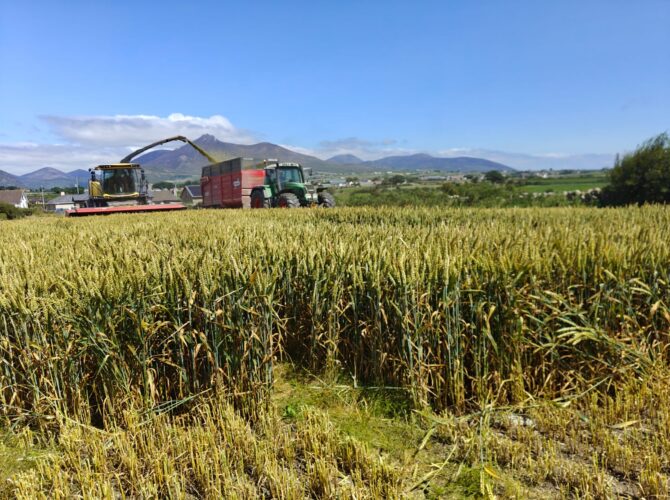
Spring wholecrop cereals offer a high-yielding, home-grown forage that can provide valuable starch and effective fibre in dairy and beef rations. However, to maximise both yield and feed quality, attention to harvest timing and silage preservation is essential.
The optimum harvest window is typically at the soft to early hard dough stage, when the crop reaches 35–45% dry matter. Harvesting too early limits starch accumulation and reduces yield, while delaying harvest increases crop dry matter, reduces digestibility, and makes compaction more difficult, increasing the risk of poor fermentation.
Unlike grass silage, wholecrop cereals contain low levels of natural sugars and beneficial bacteria. This can result in a slower fermentation process, leaving the crop more susceptible to yeast and mould growth, heating, and dry matter losses. These losses reduce the feeding value of the silage and impact farm profitability. Applying Magniva Platinum Wholecrop at harvest helps improve fermentation efficiency while protecting valuable nutrients throughout storage and feed-out. The additive contains carefully selected bacterial strains that encourage a rapid, controlled fermentation, helping to preserve energy and minimise losses.
One of the key advantages of Magniva Platinum Wholecrop is its ability to improve aerobic stability. Once a clamp is opened, exposure to oxygen allows yeasts to become active, causing silage to heat and spoil. Heating not only reduces palatability but also destroys valuable nutrients, particularly starch and digestible energy. Improved aerobic stability helps keep the silage cooler for longer, reducing waste at the clamp face and maintaining consistent feed quality.
Protecting dry matter is equally important. Every tonne of wholecrop lost through poor fermentation or spoilage represents a loss on the investment made in seed, fertiliser, crop protection and harvesting. By improving preservation, Magniva Platinum Wholecrop helps ensure more of the harvested crop is converted into high-quality feed.
To achieve the best results, good clamp management remains essential. Harvest the crop at the correct maturity, chop to the appropriate length, fill the clamp rapidly in thin layers, compact thoroughly to exclude oxygen, apply the additive accurately and seal the clamp immediately using quality oxygen barrier film. While no additive can compensate for poor silage-making practices, combining good management with Magniva Platinum Wholecrop provides the best opportunity to produce stable, nutritious silage.
High-quality wholecrop silage supports improved forage intakes, greater ration consistency, and better utilisation of home-grown feed. With purchased feed costs continuing to challenge livestock businesses, protecting every tonne harvested has never been more important.
At Fane Valley, we recommend planning harvest carefully and using proven silage additives to maximise the value of your forage. By combining good harvesting practice with Magniva Platinum Wholecrop, farmers can reduce fermentation losses, improve clamp stability, and protect the nutritional value of spring wholecrop from harvest through to the feed barrier. Find out more by contacting your local Fane Valley Agronomist or call 028 9261 0485.